
Nothing Leaves the Property
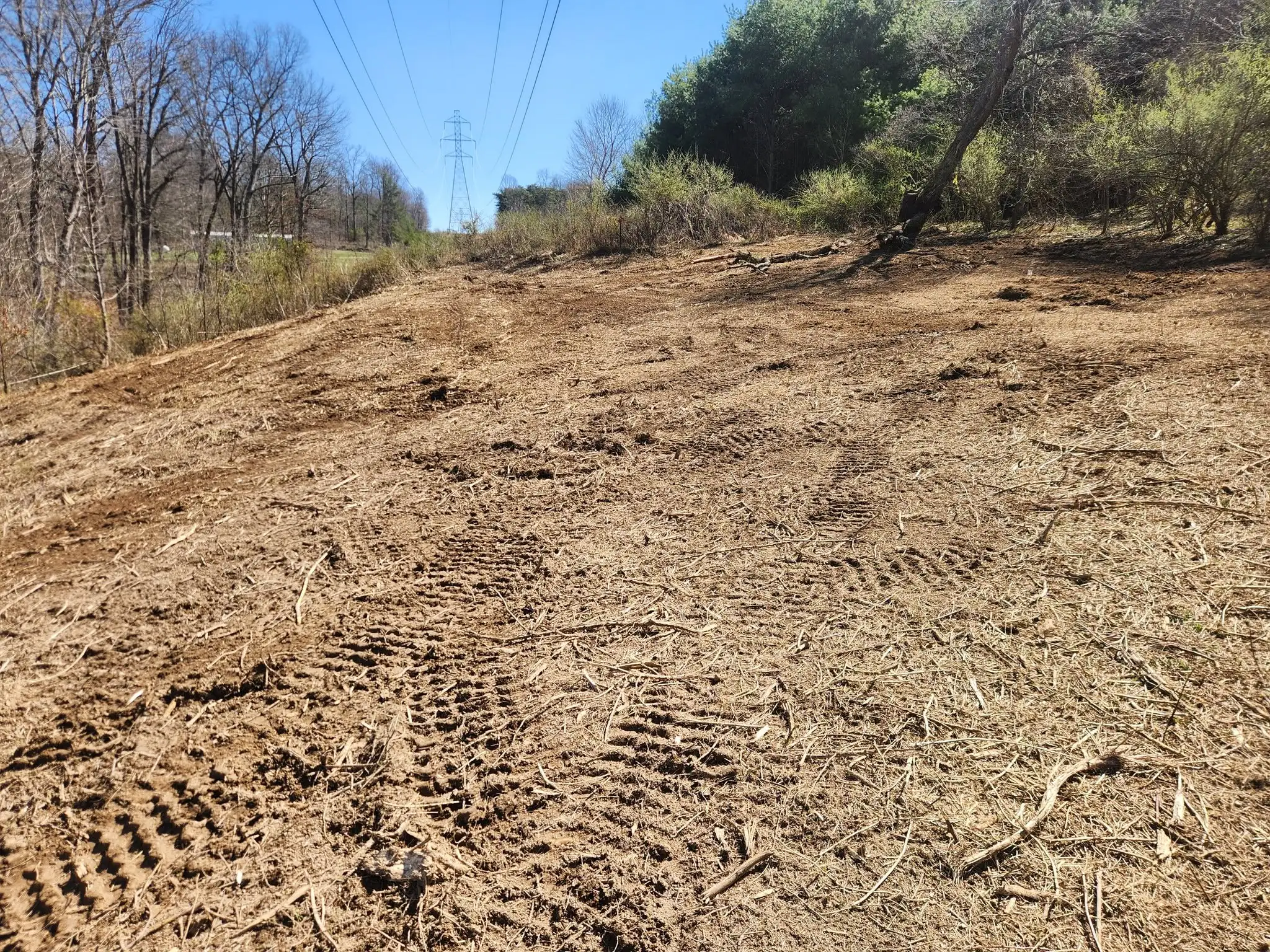
No burn piles smoldering for a week, no roll-off dumpsters, no hauling fees. The material becomes a mulch layer that holds moisture, blocks erosion, and feeds the soil as it breaks down.
Forestry Mulching
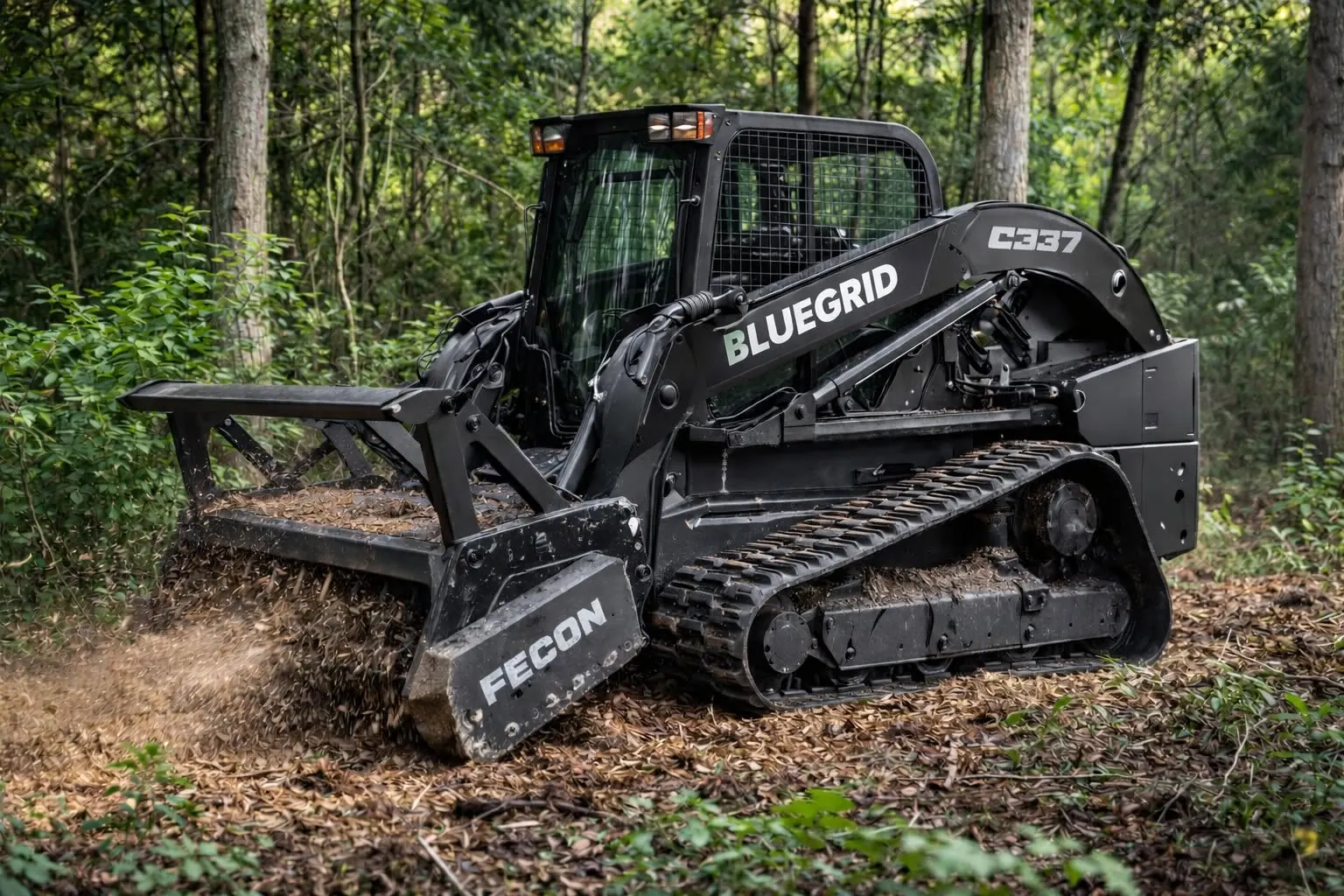
One machine grinds brush, briars, and saplings into mulch right where they stand. No burn piles, no dump runs, and no convoy of equipment tearing up ground you have to live with afterward.
Forestry mulching is the right call when your property has gone to brush, briars, and volunteer saplings, the growth that comes back thicker every year until you cannot walk it, hunt it, or see across it. A tracked carrier with a mulching head grinds that growth into chips on the spot and leaves the chips behind as ground cover.
It suits overgrown pasture, neglected woodlots, fence rows, utility corridors, and hunting ground, anywhere the target is vegetation up to roughly 8 to 10 inches in diameter. On most properties it costs less than traditional clearing, because there is one machine instead of three and nothing has to be burned or hauled away.
If your project is really about moving dirt, pulling stumps, or opening a building pad down to bare soil, land clearing is the better fit. If it is a fence line or field edge you need reopened rather than a whole field, look at brush removal.
Why Mulching
No burn piles smoldering for a week, no roll-off dumpsters, no hauling fees. The material becomes a mulch layer that holds moisture, blocks erosion, and feeds the soil as it breaks down.
Mulching is selective stem by stem. Mark the hardwoods, den trees, or shade you want kept and they stay. A dozer blade does not negotiate. It takes the whole works.
Grinding at the stump leaves the root mat intact, so the ground holds together. Traditional clearing rips roots out and opens hillsides up to washing every time it rains hard.
Typical brush and saplings run one to three acres a day. Most residential and hunting-property jobs finish inside two days, with no second trip out to clean up debris.
A tracked carrier spreads its weight across the ground, so it works hillsides and soft spots that would leave a wheeled machine buried to the axles and your field full of ruts.
The person who quotes your property is the person running the machine on it. Nothing gets lost between a salesman, a scheduler, and a sub who has never seen the job.
From Photos to Finished
A few pictures from the edge of the growth and a rough acreage tell us most of what we need to price it.
We size up stem density and terrain from your photos and send a number, by the acre or by the day, whichever fits the job.
Before the head spins we confirm property lines, keeper trees, buried utilities, and anything you want left alone.
We grind it down, level the mat, and walk the finished ground with you before the machine goes back on the trailer.
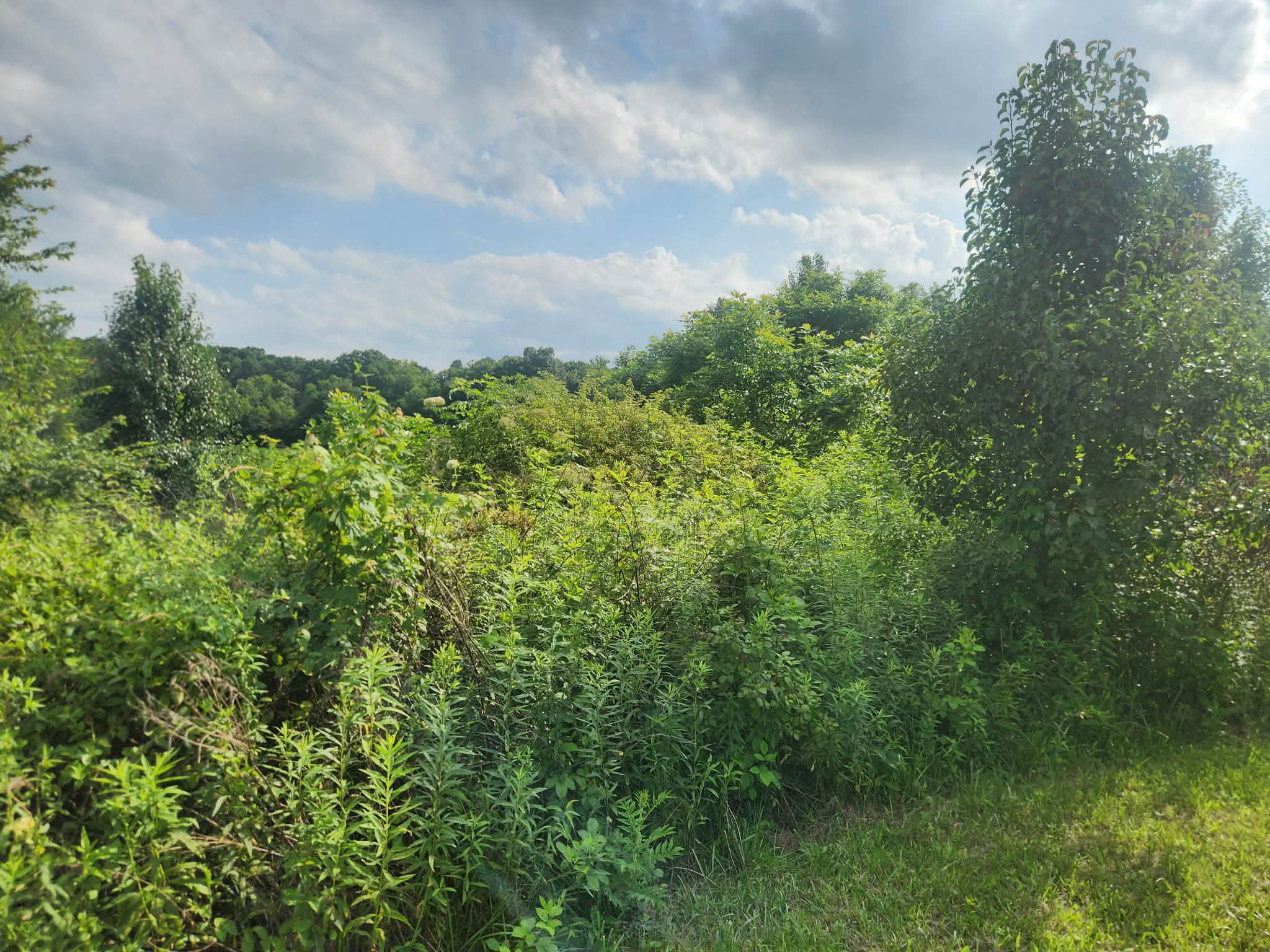
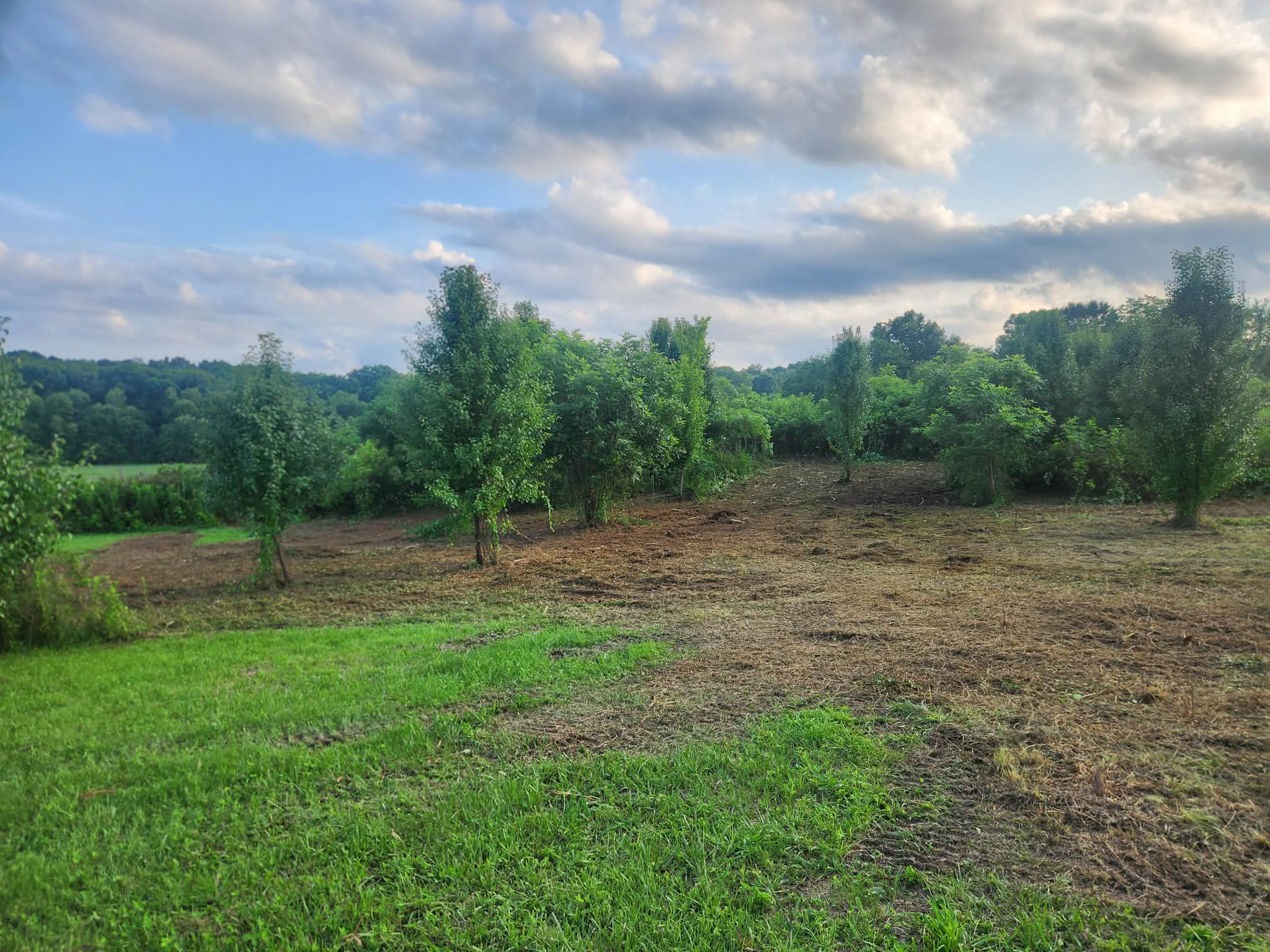
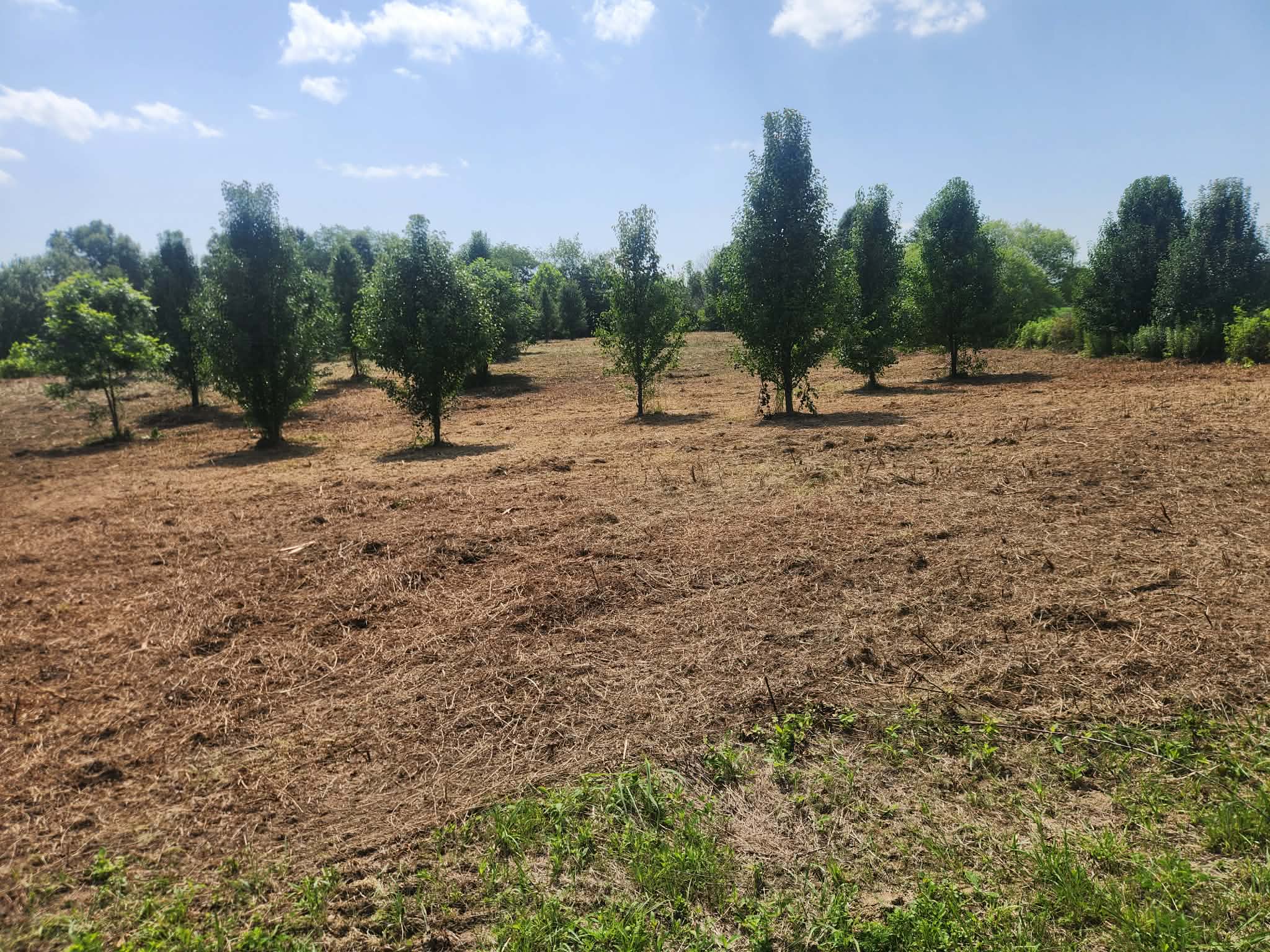
Real Jobs
Straight Answers
Mulching in our area is priced by the acre or by the day, and the number moves with how thick the growth is, how steep the ground is, and how easy the property is to get into. Light brush and saplings go fast; a lot of 6-to-10-inch stems takes longer per acre. Send photos and we will give you a real number, usually within 24 hours, at no cost.
No. Mulching is selective by nature. The operator decides stem by stem what comes down. Mark the trees you want standing, or just tell us the size cutoff, and we work around them. It is one of the biggest advantages mulching has over a dozer, which takes everything in its path.
A heavy mulch mat will slow grass down for a season while it breaks down. If your goal is pasture or lawn, tell us up front and we will spread the material thinner so you can seed sooner. If your goal is erosion control on a slope, a thicker mat is exactly what you want.
Mulching cuts at the stump rather than pulling roots, so hardy species like multiflora rose and honeysuckle will push new growth. Expect meaningful regrowth in one to three years on aggressive species. Mowing once a year afterward, or spot treating stumps, keeps it open more or less permanently.
Usually yes. A tracked machine spreads its weight far better than wheeled equipment, so it handles hillsides and soft ground that would rut badly otherwise. There are limits. Saturated bottomland after a wet spring is worth waiting out, and we will tell you honestly when that is the case.
Free Estimate
Three fields to start. We will ask for photos and acreage next, and that is all it takes to price most properties without a site visit.
Step 1 of 5
We'll reach out within 24 hours, usually a lot sooner. While you wait, see what your property could look like.