
The Bottoms Grow Back Fast
Cleared river ground does not stay clear on its own. It is worth deciding up front whether the field is going back into use or whether you want a maintenance pass in a few years.
Service Area · Piketon, OH
Piketon sits on the Scioto with the US 23 corridor running through it and steep wooded hills on both sides. That gives Pike County landowners two clearing problems that have almost nothing in common.
The river bottom north and south of town is wide, flat, and fertile. Ground that comes out of production there does not stay open. Silver maple, sycamore, and willow take a field back within a few seasons, and honeysuckle fills whatever is left at eye level.
Away from the river the ground climbs quickly into hardwood ridges cut by hollows. That is hunting ground and back acreage more than farm ground, and the clearing work there is usually about access and sight lines rather than putting a field back into production.
Mulching handles both because the material stays where it falls. If you need soil exposed for a pad or a lane cut in, that is land clearing. For opening routes through the hill ground, see trail cutting.
The Land Around Piketon
The Scioto bottoms through Pike County are some of the easiest ground to clear and some of the fastest to grow back. Deep soil, full sun, and water close to the surface mean soft, quick species: willow, silver maple, box elder, and cottonwood. Those mulch fast, which is why bottom acreage generally covers more ground in a day than hill acreage does.
The hills either side of the valley are the opposite. Oak, hickory, and locust over shale, with greenbrier through the understory and slopes that decide where a machine can and cannot work. On that ground the plan matters more than the horsepower does.
Cleared river ground does not stay clear on its own. It is worth deciding up front whether the field is going back into use or whether you want a maintenance pass in a few years.
Willow and silver maple grind quickly compared with hill hardwood, so a bottom field usually runs well ahead of the same acreage on a slope.
On the ridges the question is normally where a machine can get in and work safely across the slope. That is worth sorting out before anyone quotes a number.
Real Work, This Town
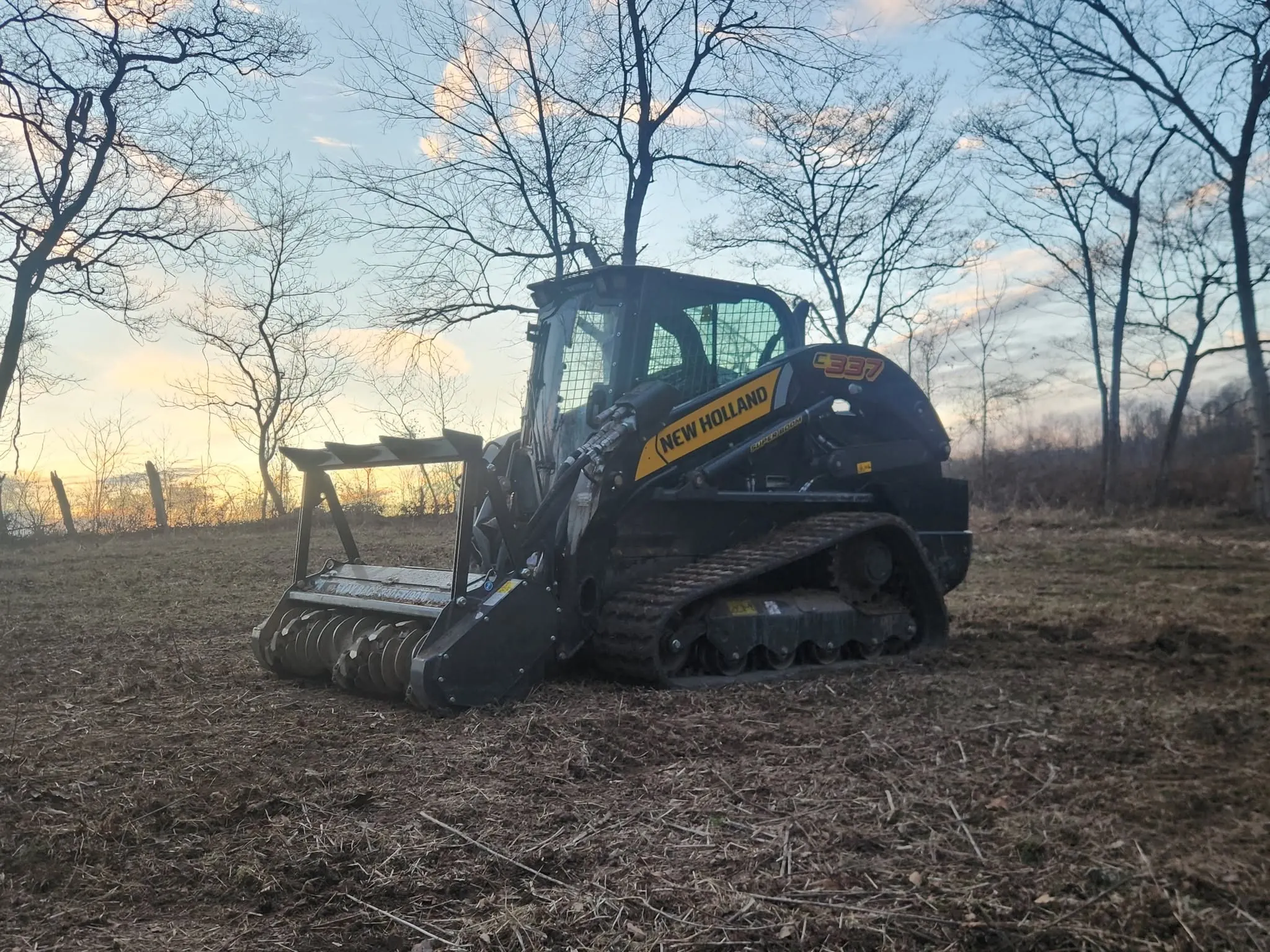
When a field or a fence line gets away from you, the ground stops being something you can walk, mow, or work. Getting it back is what changes that. BlueGrid has completed land-service work right here in Piketon, Ohio, and the photograph below is from that work.
Common Around Here
A few years off and the field is willow and box elder. Mulching puts it back to workable ground without a burn pile sitting at the edge of it for a season.
Back acreage where the understory has closed and you cannot see or move through it. Selective clearing opens routes and sight lines and leaves the mast trees alone.
Bush honeysuckle takes the edge of a field first and then works inward. Getting the wood line back is one of the more common jobs here.
Old field roads and two-tracks grow shut quickly in this county. Reopening one is usually short work and makes everything behind it reachable again.
Straight Answers
Yes, and it is some of the most common work in Pike County. The main question is timing: bottom ground stays soft after a wet spell, and we would rather wait for firmer conditions than leave ruts across a field you intend to farm.
It depends on the slope, what is underfoot, and whether there is a safe way to work across the face rather than straight up it. Send ground-level photos looking uphill and downhill and we will give you a straight answer instead of a guess.
Yes. Selective work is normal on hunting ground: routes, edges, and openings cleared while the timber you want to keep stays where it is. Tell us what you want left standing before we start.
A chip layer where the growth was. Stumps are cut low rather than pulled, and the root system stays in the ground, which is a large part of why the slope stays put on hill work.
Yes. Waverly, Wakefield, Beaver, Jasper and the ground between them are the same trip. Ask if you are somewhere not listed on this page.
Free Estimate
Three fields to start. Photos of the actual ground tell us more than acreage does, so send those when you can.
Same Trip For Us
Pike County and the US 23 corridor are one run for us. Not on the list? Ask, because we work a county or two past this regularly.
Somewhere else in the region? See everywhere BlueGrid works, or start with forestry mulching across Southern Ohio and Eastern Kentucky.
Step 1 of 5
We'll reach out within 24 hours, usually a lot sooner. While you wait, see what your property could look like.