
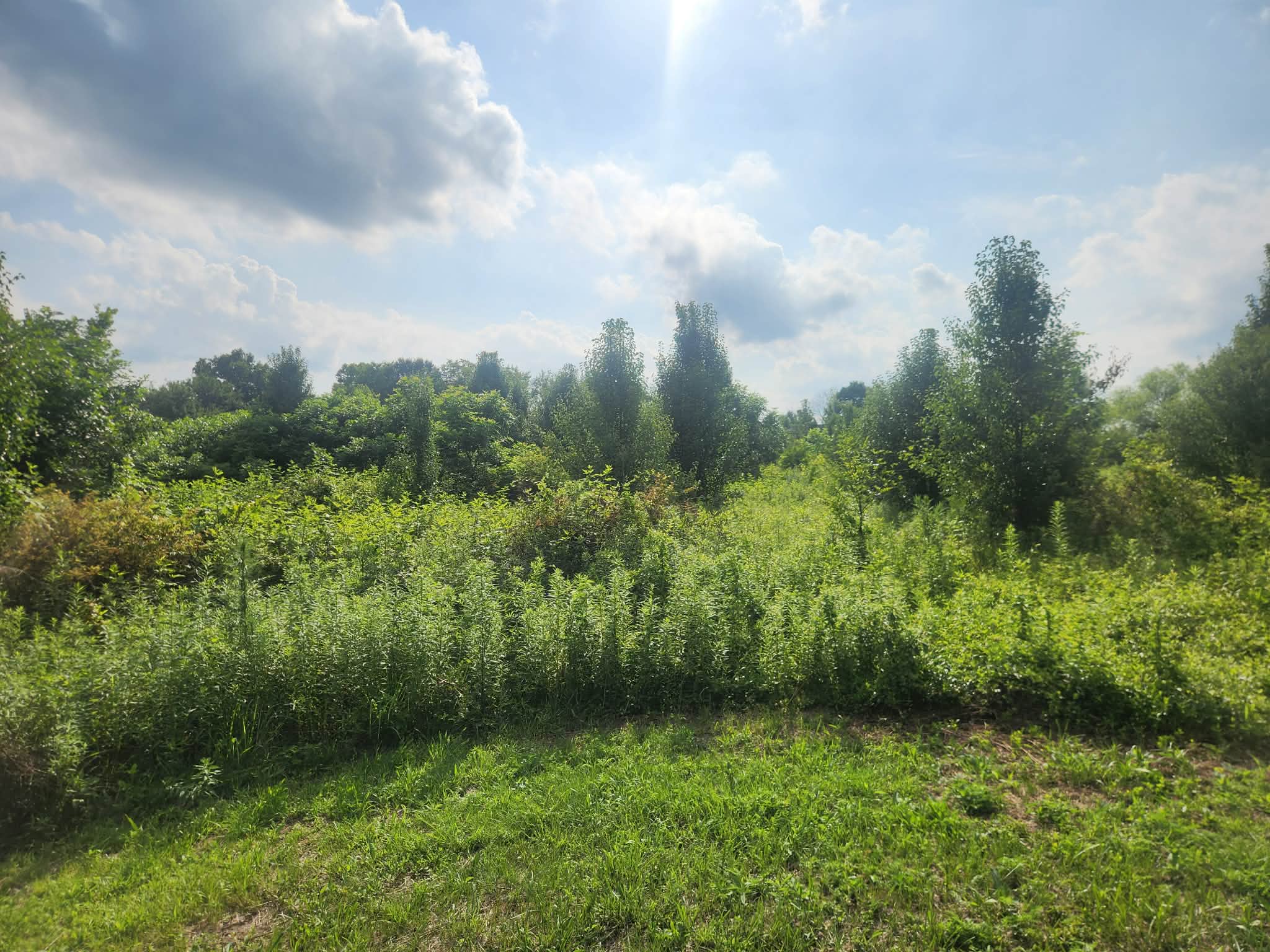
Creek Bottoms Stay Soft
Bottom ground along the creek holds water well into spring. We would rather move a job than leave ruts across a hayfield, so winter and late summer are the honest windows down there.
Service Area · Minford, OH
Minford sits in the creek valleys northeast of Portsmouth, and the ground here splits the same way the valley does: flat bottom that grows brush faster than anyone can keep up with, and wooded ridge above it that no tractor is going on.
Madison Township is small-farm country. Hayfields, horse pasture, back acreage held in the family, and a lot of it sitting a few years behind where the owner meant to keep it. Along Bear Creek the bottoms are deep and damp and grow multiflora rose and box elder into a solid wall. Up on the ridge it is second-growth hardwood with greenbrier filling every hole in the canopy.
Forestry mulching fits both because nothing leaves the property. The material goes down as a chip layer instead of into burn piles at the field edge, which matters more on small acreage where there is nowhere convenient to put a pile and nowhere to burn it safely.
If you need ground taken down to soil for a building pad or a driveway cut, that is land clearing. If the problem is a fence row or a pasture edge closing in, start with brush removal.
The Land Around Minford
The bottoms along Bear Creek and its feeders are the productive ground here, and they are also the ground that disappears fastest. Damp, sheltered, and rich, a field out of rotation for four or five years comes back as multiflora rose, box elder, and enough honeysuckle to stop a person walking through it.
The ridges are a different job entirely. Short, steep pitches of second-growth oak and hickory over sandstone, cut by hollows that run wet in spring. A tracked machine works those slopes across the face rather than up and down them, and there is usually one approach that works and several that do not.
Bottom ground along the creek holds water well into spring. We would rather move a job than leave ruts across a hayfield, so winter and late summer are the honest windows down there.
Most parcels around Minford are small enough that a burn pile is a real problem. Mulching leaves the material spread as ground cover instead of stacked somewhere you have to deal with later.
The wooded ground above the bottoms is steep but short. Thinning the understory opens a view and a walkable line without touching the mature trees holding the bank together.
Real Work, This Town
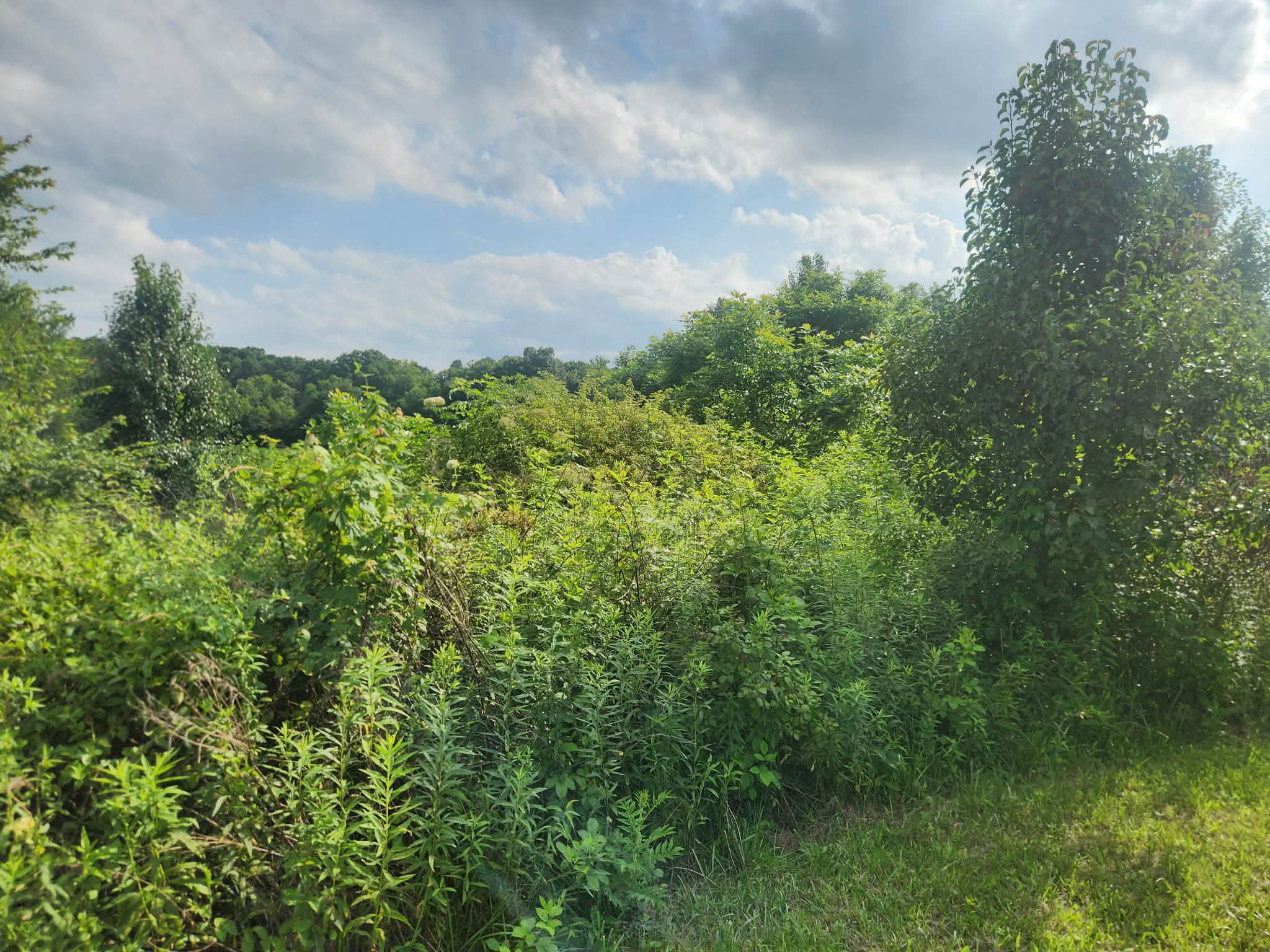
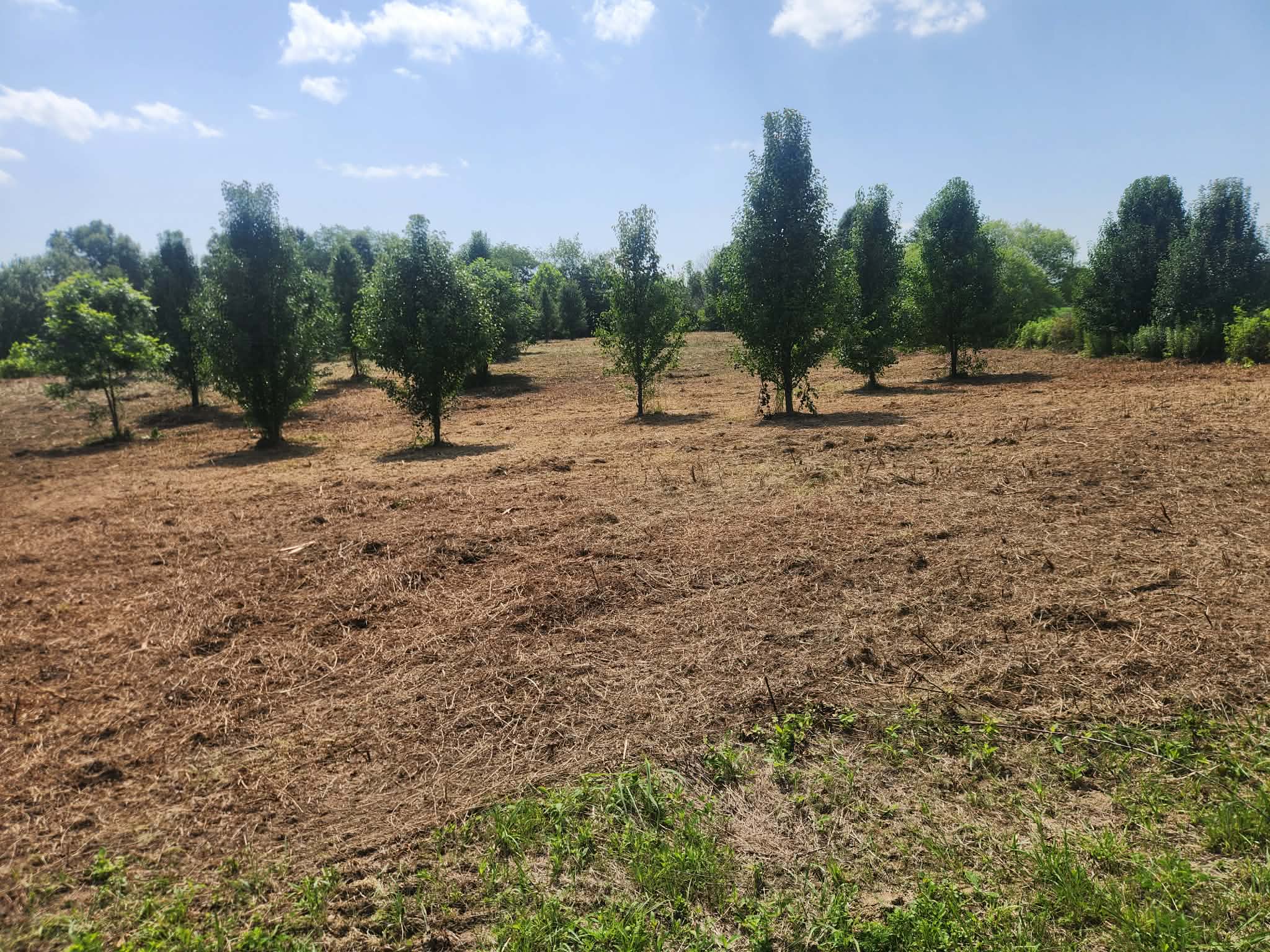
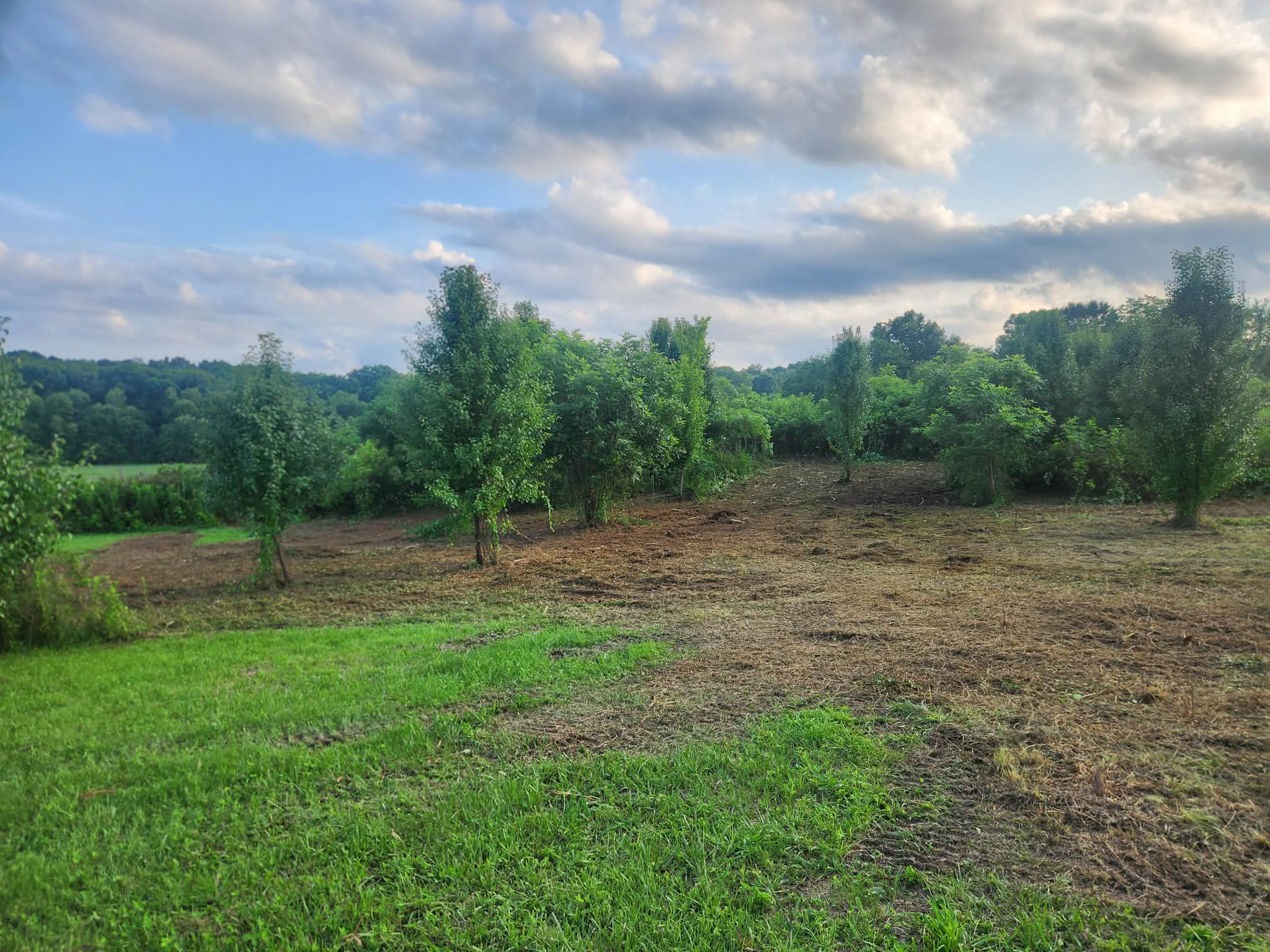
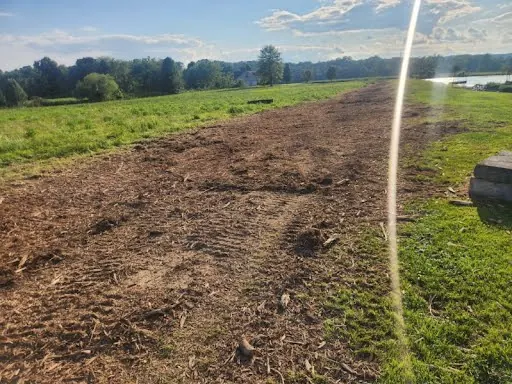
Left alone for a few seasons, ground around Minford closes in until parts of a property are hard to walk, mow, or use for anything. Getting it back opens up what you can do with the land again. BlueGrid has completed land-service work right here in Minford, Ohio, and the photographs below are from that work.
Common Around Here
Two or three acres behind the barn that stopped getting mowed. It is brush now, not grass, and a bush hog is the wrong tool. Mulching puts it back in one pass.
Road-frontage fence rows around here fill with rose and locust and then start pushing into the field. Reclaiming one usually gives back more usable ground than people expect.
Family acreage on the hill that has grown shut. Selective mulching opens a route through it while leaving the timber you actually want standing.
An old two-track that has closed over. Reopening the lane is usually a short job and it makes the rest of the property reachable again.
Straight Answers
Yes. A lot of the ground in Madison Township is two to ten acres, and small jobs are normal for us. What matters more than total acreage is whether the machine can get in and how thick the growth actually is.
Usually. A tracked machine and trailer need a place to unload and a gate wide enough to pass. Send a photo of the entrance along with the property photos and we will tell you before we come out, not after.
It gets ground into the chip layer with everything else. The canes are gone, but rose comes back from root and seed, so expect to keep after it. Mulching resets it to something you can maintain instead of something you have to fight your way into.
Sometimes, and it is worth being honest about that up front. Bottom ground along Bear Creek holds water into spring. We would rather schedule you for firmer ground than leave ruts across a field you have to hay.
A normal mulch layer breaks down and feeds the ground back. Where a customer wants a field seeded afterwards we can talk about how heavy to leave the material, because a very thick mat does slow new seed down.
Free Estimate
Three fields to start. Photos of the actual ground tell us more than acreage does, so send those when you can.
Same Trip For Us
Everything up and down the creek valleys and out toward the river is the same run for us. Not on the list? Ask.
Somewhere else in the region? See everywhere BlueGrid works, or start with forestry mulching across Southern Ohio and Eastern Kentucky.
Step 1 of 5
We'll reach out within 24 hours, usually a lot sooner. While you wait, see what your property could look like.